
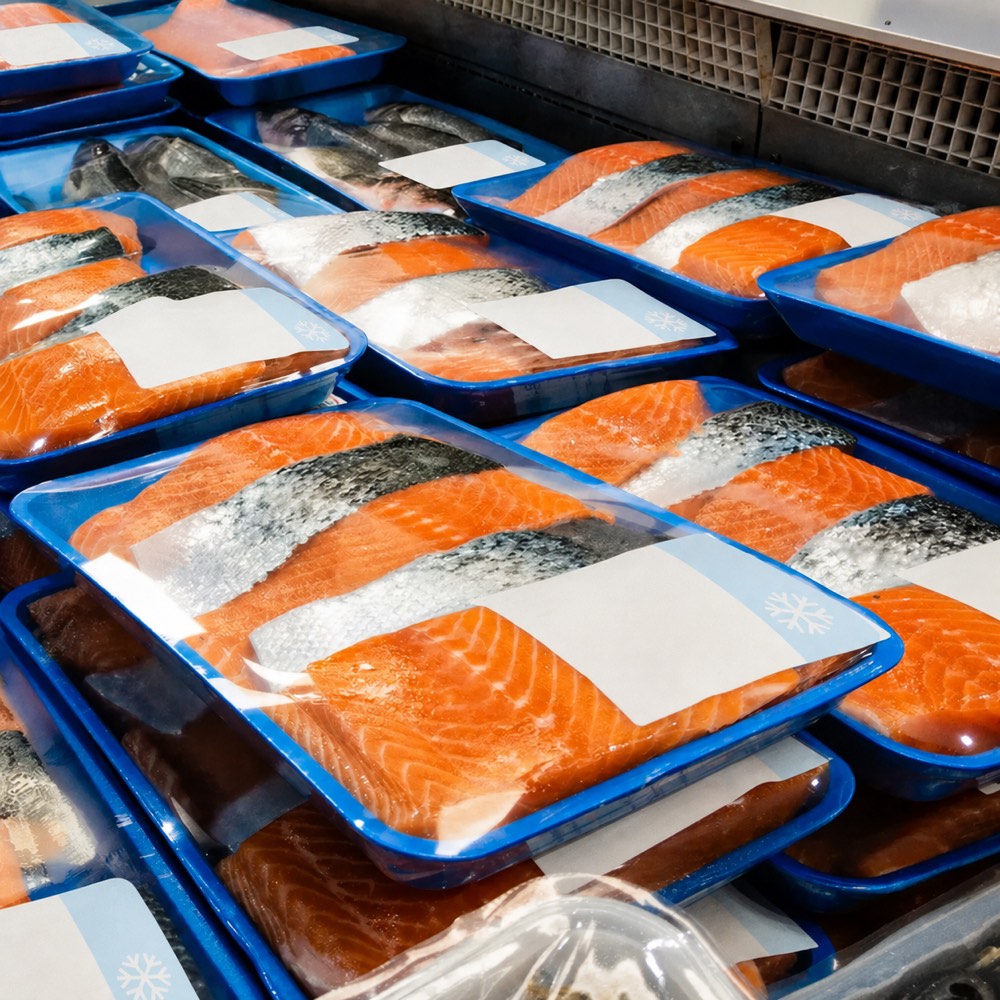
Cold Chain Label Overview
Haoxuan's cold chain label can be constructed with thermal paper, thermal synthetic paper, synthetic paper, or coated paper, combined with low-temperature hot melt adhesive, freezer-grade hot melt adhesive, or freezer-grade water-based adhesive.
Key Features
- Excellent adhesion performance in low-temperature
- With no edge lifting or brittleness
- Recommended labeling temperature: -15°C to -40°C
Typical Applications
- Refrigerated food labels
- Frozen food labels
- Cold-chain packaging labels
Customization & OEM Options
Width, length, thickness, color, adhesive system, core size, packaging and private-label branding can be reviewed against your application and order requirements.
Frequently Asked Questions
What is a cold chain label used for?
A cold chain label is used for labeling refrigerated and frozen products, especially in food packaging and logistics applications. It is designed to maintain label performance in low-temperature and freezer environments.
What materials can be used for cold chain labels?
Cold chain labels can be constructed with thermal paper, thermal synthetic paper, synthetic paper, or coated paper. Different facestock materials can be selected based on printing method, application environment, and durability requirements.
What adhesive options are available for cold chain labels?
Cold chain labels can be combined with low-temperature hot melt adhesive, freezer-grade hot melt adhesive, or freezer-grade water-based adhesive. These adhesive systems are designed to support reliable bonding performance in refrigerated and frozen conditions.
Are cold chain labels compliant with food contact standards?
Yes. Cold chain labels can be designed to comply with relevant food contact standards, including EU 102011, China GB 4806.15-2024, and FDA 21 CFR 175.105, depending on the selected material structure and application requirements.
Request a Quote
Send the required size, material or backing, adhesive type, application, order quantity and destination. Haoxuan will review the specification and respond with a suitable supply route.